
How To Successfully Start a Journal & Write Everyday

Starting a journal can change how you think, feel, and understand your life. Whether you want clarity, creativity, or calm, journaling is one of the simplest habits with the biggest impact. This guide will walk you through exactly how to start and write a journal—step by step, without pressure or perfection, and we'll cover:
- What is journal writing?
- 3 ways to start a journal
- 12 types of journals you can keep
- 10 benefits of journaling consistently
- How to start a journal in 6 easy steps
- Tips for how to journal effectively
- Top 10 journal prompts for new journalers
- How to get started writing a journal with Penzu
Journaling doesn't require special skills, expensive notebooks, or hours of free time. All it takes is a willingness to begin. Let's start by understanding what journal writing really means—and why it's so powerful.
What is journal writing?
Journal writing is the habit of putting your thoughts, feelings, and experiences into words on a regular basis. It's a personal space to reflect, make sense of life, explore ideas, and express yourself freely, without rules, judgment, or pressure to be perfect. Over time, it becomes a trusted record.
At its heart, journaling is about honesty and self-expression. There's no required length, format, or writing style. You might write a single sentence one day and several pages the next. Both count. What matters is showing up and letting your thoughts land on the page.
Many people assume journaling is only about recording daily events, but it can be much more meaningful than that. A journal can hold goals, worries, dreams, gratitude, questions, or moments you don't want to forget. It's a safe place to think things through and hear your own voice more clearly.
Once you understand that journal writing has no strict rules, starting feels far less intimidating. With that clarity, the next step is choosing the best way to begin your journal and deciding what format fits your life right now.
3 ways to start a journal
Starting a journal begins with one simple choice: how you want to write. There's no best or correct method—only the one that feels easiest and most natural for you. When your journaling method fits your life, staying consistent becomes much simpler.
Below are a few popular and effective ways to begin journaling, along with guidance to help you choose what works best for you.
1. Write online or use a journaling app
Digital journaling is one of the easiest ways to start, especially if you already spend time on your phone or computer. It allows you to write anytime inspiration strikes—during a break, before bed, or while traveling. Many people find typing faster and more natural, which helps thoughts flow freely without interruption.
Online journals also offer helpful features like automatic saving, organization, and privacy protection. You don't have to worry about losing pages or forgetting where you left off, which makes it easier to build a steady habit.
2. Use a physical journal
A physical journal offers a slower, more tactile experience. Writing by hand can help you feel grounded and intentional, making journaling feel like a calming ritual rather than a task. Many people enjoy the ritual of opening a notebook, choosing a pen, and writing without distractions, or a short break from screens.
Physical journals can be simple or decorative. Some people love blank notebooks, while others prefer guided journals with prompts. The key is choosing something that feels inviting, not intimidating. A plain notebook works just as well as an expensive one. If you enjoy the feeling of pen on paper and want a screen-free habit, a physical journal may be the perfect place to start.
3. Try a hybrid approach
Some people prefer combining methods. You might journal digitally during the week and write by hand on weekends. Others like adding sketches, lists, or even voice notes alongside written journal entries. Journaling doesn't have to fit into one box—it can adapt to your needs and mood.
The key is to remove friction. Choose the method that makes starting feel easy, not forced.
Once you've chosen how you want to journal, the next step is understanding the different types of journals you can keep—and finding the ones that align with your goals and interests.
12 types of journals you can keep
Journals come in many forms, and each type serves a different purpose. You don't have to choose just one—you can try several or even combine them into a single journal that fits your life.
- Daily Journal – Write about your day, thoughts, and experiences
- Gratitude Journal – Focus on what you're thankful for
- Reflective Journal – Explore emotions, lessons, and personal growth
- Goal-Setting or 5-Year Journal – Track goals, progress, and motivation
- Dream Journal – Record dreams and recurring themes
- Travel Journal – Capture memories, places, and reflections from trips
- Mental Health Journal – Process stress, emotions, and challenges
- Creative Writing Journal – Store poems, stories, and ideas
- Bullet Journal – Combine planning, tracking, and reflection
- Prayer or Spiritual Journal – Write prayers, intentions, and spiritual thoughts
- Bible Journal - Keep entries related to your personal bible study
- Pregnancy Journal - Keep a record of your experiences through pregnancy
Looking for more?
This isn't a complete list of every possible journal you can write—there are tons of options. Check out our list of different types of journals you can write for more ideas.
Choosing a journal type gives your writing gentle direction without adding pressure. Once you know what kind of journal you want to keep, it's easier to stay motivated and consistent—which leads us to the powerful benefits of journaling.
10 benefits of journaling consistently
Journaling isn't just about writing—it's about improving how you think, feel, and live. Even a few minutes a day can create meaningful change over time.
- Reduces stress and anxiety by clearing your mind
- Improves emotional awareness and self-understanding
- Boosts mental clarity and decision-making
- Strengthens memory and personal insight
- Encourages gratitude and positive thinking
- Supports mental health and emotional processing
- Increases focus and productivity
- Helps track growth and personal progress
- Enhances creativity and idea generation
- Provides a safe, private outlet for honest expression
Understanding these benefits makes it easier to commit to the habit. Now that you know why journaling matters, let's walk through exactly how to start a journal step by step—without overwhelm or guesswork.
Journaling has many benefits
It's soothing, builds self-awareness, and improves mental wellness. Check out our list of 14 powerful benefits of journaling, backed by the scientific studies that prove it.
How to start a journal in 6 easy steps
Starting a journal doesn't need to feel overwhelming. You don't need special skills, lots of time, or a perfect plan. These simple steps will help you begin with confidence and keep moving forward.
1. Decide why you want to journal
Take a few minutes to think about what's pulling you toward journaling right now, and try to keep that in mind as you start your journal. You might want a place to release stress, understand your emotions, document your life, or spark creativity. Your reason can be broad or specific, and it can change over time. What matters is that your journal serves you, not the other way around.
2. Choose your journal format
Your journal should fit easily into your daily life. If you enjoy typing and want something always within reach, an online journal may feel effortless. If you prefer slowing down and writing by hand, a physical notebook might be more inviting. Don't choose based on what you think you should do—choose what feels comfortable and sustainable.
3. Set a realistic schedule
Many people give up on journaling because they aim too high too fast. Instead of committing to daily writing, start with a schedule you know you can keep. Five to ten minutes, two or three times a week, is enough to create momentum. Consistency matters far more than frequency.
4. Pick a simple starting point
Your first entries don't need to be meaningful or deep. You can write a few sentences about your day, a list of thoughts in your head, or how you're feeling in the moment. Starting small reduces pressure and helps you build confidence with each entry.
5. Let go of perfection
A journal is a private space for your unfiltered thoughts. Don't worry about grammar, spelling, or how your writing sounds. Let your thoughts spill onto the page exactly as they are. The more honest and unedited your writing is, the more helpful and healing it becomes.
6. Build the habit gently
Remove any obstacles that might stop you from writing. Keep your journal visible, save it on your home screen, or set a gentle reminder. When journaling feels easy to start, it naturally becomes something you return to rather than avoid.
With these steps in place, journaling becomes simpler and more enjoyable. Next, we'll look at practical tips that help you journal more effectively and get even more value from every entry you write.
Tips for how to journal effectively
Once you've started journaling, a few simple practices can help you get more out of it. Effective journaling isn't about writing more—it's about writing in a way that feels supportive, honest, and sustainable.
- Write honestly, not perfectly: Let your journal be a judgment-free space. Write what you truly think and feel, even if it feels messy or unclear. Honesty is what makes journaling powerful and meaningful over time.
- Keep your entries simple and focused: You don't need to cover everything in one entry. Focusing on a single thought, emotion, or moment often leads to deeper reflection and less overwhelm.
- Use prompts when you feel stuck: On days when you don't know what to write, prompts can gently guide your thoughts, and often a single question is enough to get your words flowing again.
- Be consistent, not rigid: Aim for regular writing, but allow flexibility. Some weeks you'll write more, others less. What matters is returning to your journal without guilt or pressure.
- Reread old entries occasionally: Looking back helps you notice patterns, growth, and progress you might otherwise miss. It can be encouraging to see how far you've come.
- Protect your privacy: Knowing your journal is private allows you to write freely. Choose a secure place or platform so you feel safe being completely honest.
Effective journaling grows naturally with practice. As writing becomes easier, prompts can help you explore deeper thoughts and ideas—especially when you're just getting started. Next, we'll share ten journal prompts designed specifically for new journalers.
Top 10 journal prompts for new journalers
Journal prompts are incredibly helpful when you're just starting out. They remove the pressure of figuring out what to write and gently guide your thoughts onto the page. You don't need to answer a prompt perfectly—just let it lead you somewhere honest.
Here are ten beginner-friendly journal prompts to help you start writing with ease:
- How am I feeling right now, and why?
- What's one thing that happened today that stayed with me?
- What's been taking up the most space in my mind lately?
- What am I grateful for today, even if it feels small?
- What's something I'm worried about right now?
- What do I need more of in my life at this moment?
- What's something I've learned about myself recently?
- What would I say to myself if I were a close friend?
- What's one thing I want to let go of?
- What does a good day look like for me right now?
Prompts are tools, not rules. Use them whenever you feel stuck and skip them when you don't need them. Now that you know how to start writing with confidence, the final step is choosing the right place to keep your journal—and making it easy to write consistently with Penzu.
Master list of 300+ journal prompts
If you're still struggling for ideas, we've got an entire piece on journal prompts, with unique ones designed for every mood, goal, and stage of life.
How to get started writing a journal with Penzu
If you're ready to begin journaling and want something simple, private, and easy to stick with, writing your journal with Penzu is a great place to start. Penzu removes many of the common obstacles that stop people from journaling—like forgetting to write, worrying about privacy, or not knowing where to begin.
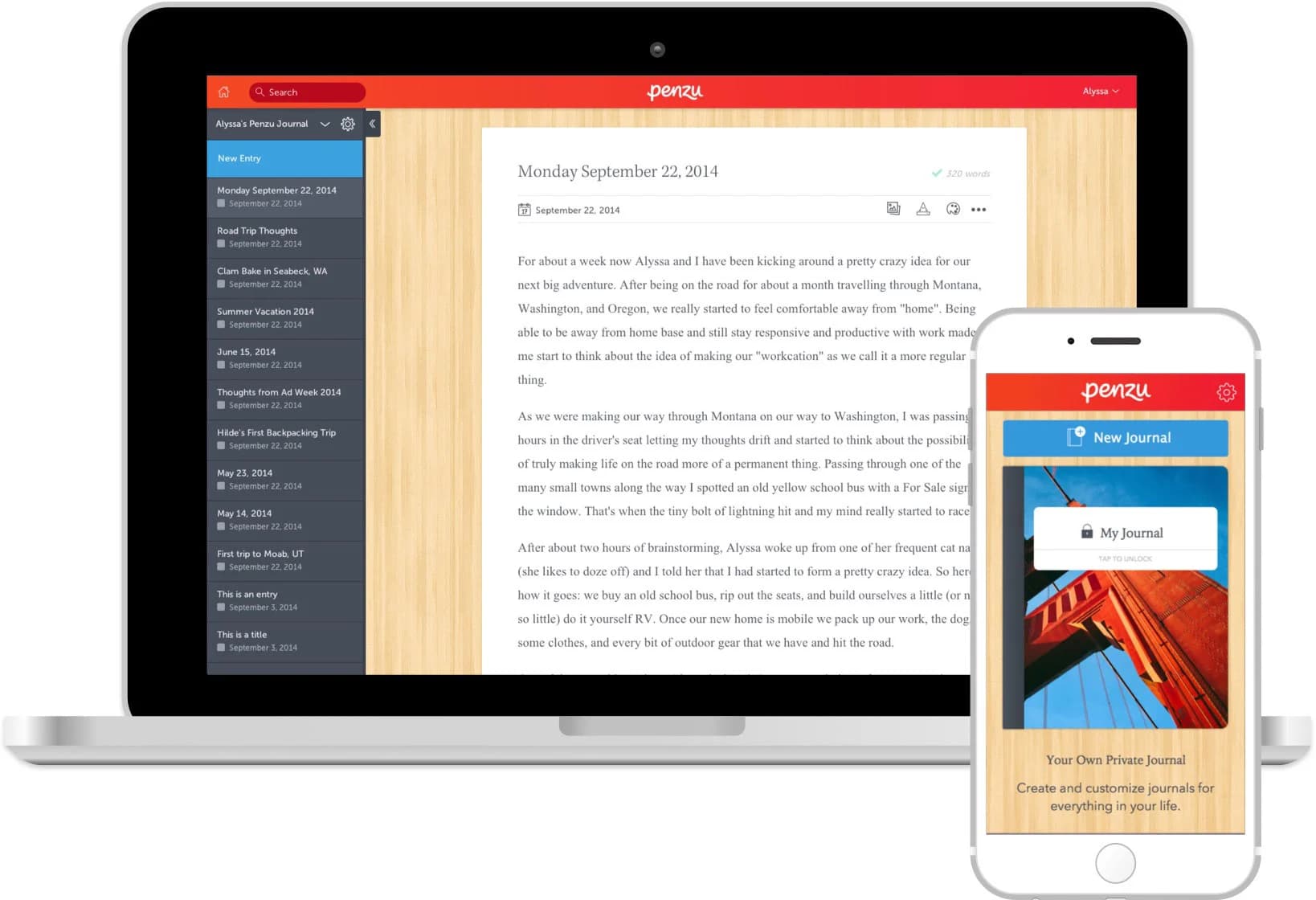
Getting started is simple: you create an account, open a new journal, and start writing right away. Because your journal lives online, you can write from your phone, tablet, or computer whenever a thought comes to mind. That convenience makes it much easier to build a consistent habit.
With Penzu, your entries are also secure and protected, so you can write honestly without worrying about anyone else reading your thoughts. This sense of safety helps you go deeper and be more open in your writing.
Most importantly, Penzu supports journaling as a long-term habit. Whether you write daily or a few times a week, it gives you a reliable, welcoming space to return to again and again. You don't need to worry about formatting, organizing pages, or keeping track of notebooks. Everything is saved automatically, easy to find later, and always available when you need it.
If you've been thinking about starting a journal—or restarting one—this is your sign to begin. You can start writing today with Penzu!
Remove all the barriers and start journaling today
Penzu is a reliable, long-term place to start your journey to journaling